
Where to Store Your Belongings Between Homes
Moving between homes does not always happen in one smooth step.
You may have to leave your current home before the next one is ready. A home sale may close early. A lease may end before your new place is available. Or a closing date may change.
When that happens, you need a temporary place for your belongings.
The key is to decide what needs to stay with you, what can go into storage, and how easily you will need to reach it.
When Your Move-Out Date Comes Before Your Move-In Date
A gap between homes can happen for several reasons.
You may sell your current home before you can move into the next one. Your new home may still need work. You may also be staying somewhere temporary while you wait for your next home.
The situation is different for each person, but the storage problem is similar.
Your current home is no longer available. Your next home is not ready yet. Your belongings still need somewhere to stay.
This is where temporary storage can bridge the gap.
You do not have to treat the entire move as one event. Think of it as two stages:
Move out → temporary storage → move into the new home
That simple change in thinking can make the transition easier to plan.
You May Not Need to Store Everything
Before looking for storage, separate the things you will need during the gap from the things you can leave packed away.
Keep your daily essentials accessible
Some belongings may need to stay with you.
These can include clothing, toiletries, important documents, work items, medications, basic kitchen items, and other things you use every day.
You do not want to place these items somewhere that makes them difficult to reach.
Store what you can live without for now
Other belongings may not be needed until you move into the new home.
Furniture, extra household items, decorations, seasonal belongings, and packed boxes may be easier to keep in temporary storage.
This approach can also reduce the amount of space you need.
Instead of asking, “Where can I put my whole house?”, start with a better question:
“What do I actually need to store until my new home is ready?”
Where Can Your Belongings Stay Until the New Home Is Ready?
You have several ways to handle the gap between homes. The right option depends on how much you have, how long you need the space, and whether you need access during the transition.
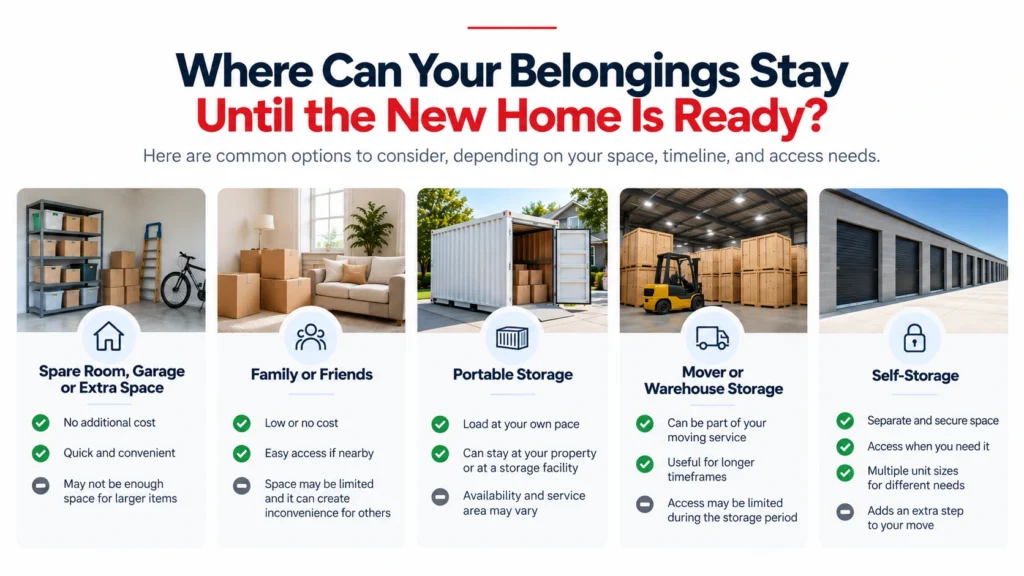
A spare room, garage, or other available space
If someone in your household has extra space, you may be able to keep some belongings there.
This can work well when you only need to move a small amount out of your home.
The limitation is available space. Large furniture and many boxes can quickly fill an area that seemed spacious at first.
Family or friends
A family member or friend may be able to hold some belongings for you.
This can help when you only need temporary space. It can also make access easier if the location is nearby.
But you still need to consider how much space they have and how much handling the arrangement creates.
Portable storage
Portable storage gives you another temporary option. The container stays with you or at a storage location, depending on the service.
This can be useful when you want to load your belongings over time.
The exact process depends on the provider and the service area.
Mover or warehouse storage
Some moving companies offer storage between moves.
This can be useful when the storage period is part of a larger moving arrangement.
Ask how the company handles access, pickup, delivery, and the extra movement of your belongings.
Self-storage
A self-storage unit gives you a separate space for belongings while you wait for your next home.
It can make sense when you need your belongings stored outside your temporary living space.
It also gives you a place to retrieve selected items before the new home is ready.
Four Things to Consider Before Choosing Temporary Storage
Once you know what needs to leave your current home, look at the practical side of the decision.
1. How long will the gap last?
A short gap may require a different arrangement from a longer or uncertain one.
If your move-in date is not firm, consider how the storage arrangement will work if the gap lasts longer than expected.
2. How much do you need to store?
The amount of furniture and household goods matters more than the size of your home alone.
Make a simple inventory of the larger items first. Then account for boxes and smaller belongings.
This gives you a more useful starting point when you estimate the space you need.
3. Will you need access?
Some people can store their belongings and leave them alone until moving day.
Others may need to retrieve clothes, documents, furniture, work equipment, or other items during the transition.
Think about access before choosing where your belongings will stay.
4. How much extra handling will it create?
Temporary storage adds another step to the move.
Instead of going directly from the old home to the new home, some belongings may follow this path:
Old home → storage → new home
That means you may need to load and unload those belongings more than once.
Understanding this upfront helps you plan the move realistically.
If You Use Self-Storage, Start With What You Actually Need to Store
Do not choose a storage unit based only on the number of bedrooms in your home.
Start with your actual inventory.
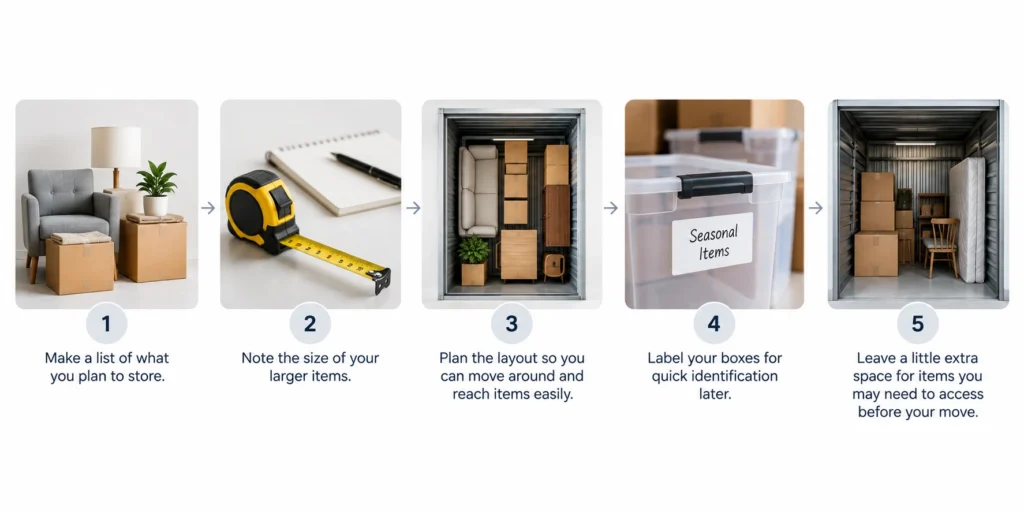
List the large items first. Then add boxes, bins, and smaller belongings. Think about which items can stay packed and which ones may need access.
Once you have that list, you can estimate how much floor space you need.
Our storage unit sizes guide can help you understand how different unit sizes relate to different storage needs.
The goal is not to fill every available inch. You also need to think about how you will reach the belongings you may need before your new home is ready.
Plan for the Move Into Your New Home
Temporary storage works best when you also think about the final move.
Your belongings will eventually leave storage and go into your new home. Try to keep that second move in mind from the start.
Group items in a way that makes the next move easier. Keep important items easy to identify. Know which belongings should go into the new home first.
If you are handling the physical move yourself, our guide to how to pack, move, and store belongings covers the broader process.
The aim is simple: make the temporary step easier without creating unnecessary work later.
RAD Mini Storage in Imperial, CA
If you need temporary self-storage in Imperial, RAD Mini Storage offers units for different amounts of belongings.
The facility has Drive-Up access, so you can bring your vehicle directly to your unit. Units are on the ground floor, and the facility offers 24/7 access.
RAD Mini Storage also has a fenced and gated facility, unique gate codes, recorded video surveillance, and online rent and payment options. A manager is available Monday through Friday from 8 AM to 4 PM.
You can review current storage unit prices in Imperial, CA before choosing a unit.
You can also learn more about the facility’s 24-hour access and security features.
When you know how much space you need, you can view available storage units at RAD Mini Storage.
FAQs
What should I do if my new home isn’t ready yet?
First, decide which belongings you need during the gap and which ones can stay packed. Then choose a temporary option based on the amount of space you need, how long the gap may last, and how often you need access.
Do I need to put everything in storage between homes?
No. You can keep daily essentials with you and store belongings you do not need until the new home is ready. This can reduce the amount of temporary storage space you need.
What are my options for storing belongings between homes?
Options include using available space with family or friends, portable storage, mover or warehouse storage, and self-storage. The right choice depends on your amount of belongings, expected storage period, access needs, and handling requirements.
How do I know how much storage space I need?
Start with an inventory of the larger furniture and household items you need to store. Then account for boxes and smaller belongings. Use the inventory to estimate the storage space rather than relying only on the size of your current home.
Bottom Line
A gap between homes does not mean your belongings have to become a problem.
Start by deciding what you need to keep accessible and what can stay stored. Then choose a temporary storage option that fits your belongings, timeline, access needs, and moving plan.
For Imperial residents who need self-storage during the transition, RAD Mini Storage provides multiple unit sizes with Drive-Up access and 24/7 access. For El Centro residents moving between homes, storage near El Centro keeps the second move simple.


